+86-13735915463
 Language
  Español
 русский
 中文简体
中文简体

 0
0
0
0
May 15, 2026
Lip Oil,Professional Lip Oil Factory are increasingly linked with the growing demand for differentiated lip care products, especially as beauty brands look for formulations that can be adjusted to match varying market positioning and user preferences. The introduction of custom blending services is reshaping how lip oil products are developed, allowing more structured control over texture, finish, and ingredient combinations.
The shift toward customization is not only about visual or sensory variation but also about supporting brands that need flexible product lines across multiple distribution channels. This approach is gradually changing how lip oil formulations are planned and produced within professional manufacturing systems.
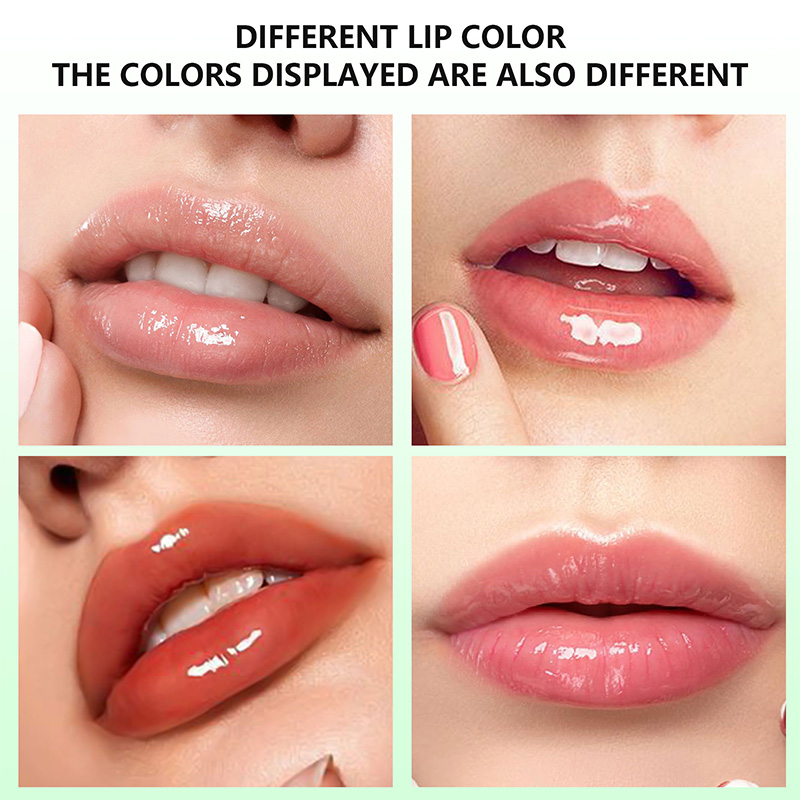
Over the past few years, lip oil has expanded from a niche cosmetic item into a widely used category across skincare and makeup segments. As product lines diversified, brands began to encounter limitations with standardized formulations that did not always align with different consumer groups or regional preferences.
One common challenge is texture expectation. Some markets prefer a lighter, fast-spreading oil layer, while others expect a more noticeable gloss effect. A single formulation often struggles to satisfy both directions without compromise. At the same time, ingredient preferences vary, especially regarding plant-based oils, synthetic esters, and fragrance levels.
Another factor is brand differentiation. With many similar lip care products in circulation, companies are looking for ways to adjust formulation details without redesigning the entire product structure. This has increased interest in custom blending systems within a Professional Lip Oil Factory environment, where formulation parameters can be adjusted more precisely.
Custom blending refers to a controlled formulation process where oil ratios, texture modifiers, and additive components are adjusted according to brand requirements. Instead of offering a fixed formula, the production process is structured to allow variation within defined stability and compatibility limits.
Key adjustable elements include:
To support this structure, formulation testing is typically conducted in multiple stages to evaluate consistency and stability under different temperature and storage conditions.
|
Component Area |
Adjustable Range Example |
Functional Consideration |
|
Oil base selection |
Plant oil / synthetic ester mix |
Texture and absorption behavior |
|
Viscosity control |
Light / medium flow adjustment |
Application smoothness |
|
Gloss balance |
Low to medium shine level |
Visual finish variation |
|
Additive inclusion |
Vitamins, botanical extracts |
Product positioning flexibility |
|
Pigment loading |
Transparent to tinted versions |
Makeup compatibility |
This structure allows brands to develop multiple product variations while maintaining a unified base system.
Custom-blended lip oil is used in a wide range of brand strategies, particularly where product differentiation is needed across retail channels or consumer segments. In private label development, it supports the creation of distinct product lines without requiring entirely separate manufacturing setups.
In cosmetic brand portfolios, lip oil formulations are often adjusted for:
A typical use case involves a brand developing three variations of lip oil using a shared base formula but adjusting viscosity and gloss level to match different retail categories. This reduces formulation complexity while maintaining visible product differentiation.
In production environments, structured feedback loops are commonly used to refine custom blending systems. During pilot batches, formulation teams often evaluate how small adjustments influence user perception during application and wear.
Observed patterns from controlled testing cycles include:
These observations are typically recorded across multiple production rounds before finalizing a formulation for mass manufacturing.
The introduction of custom blending in lip oil production reflects a broader shift in cosmetic manufacturing toward modular product development. Instead of relying on fixed formulations, manufacturers are increasingly structuring production systems that allow controlled variation within a stable base framework.
This approach supports several operational advantages:
It also changes the role of a Professional Lip Oil Factory from a fixed-output producer to a formulation-adjustable production partner, where product design and manufacturing are more closely connected.
Share:
Related Products

CONTACT US
 +86-13735915463
 +86-0578-6123999
18857730868
 +86-13735915463
 No.10 Shuguang Road,Wudu Industrial Area,Qingyuan County,Lishui City,Zhejiang Province, China
Mobile

Cosmetic Makeup Products Manufacturer