+86-13735915463
 Language
  Español
 русский
 中文简体
中文简体

 0
0
0
0
Jan 02, 2026
A growing interest in product feel and ease of use has drawn attention to how a Professional Concealer Factory and a Professional Blush Factory refine their approaches to texture development. Rather than focusing only on visual payoff, these facilities study how the product behaves during application, how it interacts with different skin types, and how users expect makeup to perform in their everyday routines. The discussion around texture design is becoming increasingly important for consumers who want comfort, convenience, and a predictable experience when applying complexion products.
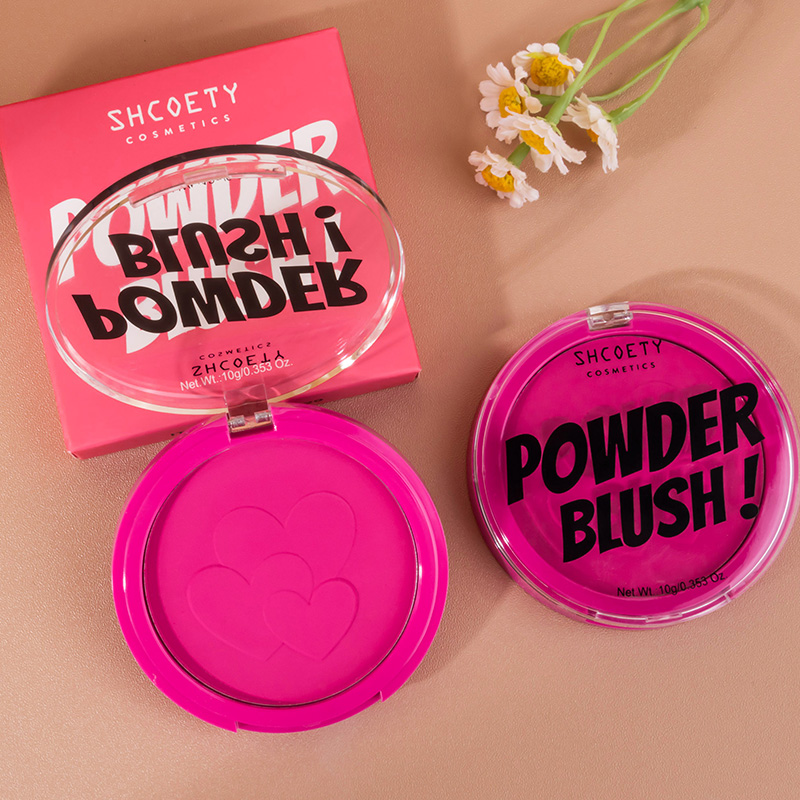
User-friendly texture goes beyond softness or smoothness. It relates to how the formula spreads, builds, blends, and settles on the skin. Factories study characteristics such as slip, adhesion, weight, and flexibility. For blush, this involves finding the right balance between pigment concentration and binder structure so the color transfers evenly without grabbing or patching. For concealer, the focus shifts to maintaining consistent spreadability while still providing sufficient coverage.
Research teams often observe makeup habits from everyday consumers, makeup beginners, and professional artists. These observations reveal whether users prefer a faster-blending texture, whether they struggle with dry-down speed, or whether certain ingredients cause discomfort during long wear. Such real-world feedback guides texture adjustments early in development instead of relying solely on laboratory assumptions.
Texture design heavily depends on ingredient compatibility. Factories evaluate powders, waxes, emollients, and surface-treated pigments to understand how each component affects glide, softness, and flexibility. A Professional Blush Factory may experiment with spherical powders to create a smoother touch, while testing various concentration levels to ensure the formula maintains stability during temperature changes.
Meanwhile, a Professional Concealer Factory may focus on elastomers, lightweight oils, and film-forming agents to produce a texture that spreads evenly but does not feel heavy. Because many users apply concealer to sensitive areas such as under the eyes, the sensory profile must remain comfortable and predictable. Each material undergoes testing for viscosity, mixing behavior, color uniformity, and interaction with commonly used skincare products.
Factories also consider long-term storage conditions. For instance, exposure to humidity or heat can alter the texture of powders or emulsions. By understanding these reactions, development teams choose materials that keep the texture consistent even after months of use, preventing issues like hardening, caking, or separation.
Processing steps play an equally important role as ingredient selection. Grinding, heating, cooling, and casting influence how pigments distribute through the base formula. A blush that feels smooth on the skin usually goes through several rounds of careful mixing to ensure even dispersion. If the product is baked or pressed, the level of pressure or baking duration alters firmness and pick-up.
Some factories use slow-speed blending for delicate pigments to avoid breaking their structure, which helps maintain a more even application. Others apply controlled heating cycles to ensure waxes melt and combine consistently with oils. Adjusting these details helps avoid issues like dusty finish, uneven color payoff, or a hard surface forming on pressed pans.
Different blush formats—cream, liquid, and powder—require tailored production methods. Powders often rely on binding agents to maintain cohesion without compromising softness. Cream blushes depend on emulsification stability, ensuring that oils and water remain uniformly distributed. Liquid blushes need precise viscosity control so users can dispense the right amount without difficulty.
Factories frequently review how consumers layer multiple products, such as primer, sunscreen, foundation, concealer, and blush. Layering affects slip and adhesion, which determines whether blush blends smoothly or catches on dry patches. User tests often reveal small behavioral details—like which tools people choose or how quickly they expect the product to blend—that significantly influence texture fine-tuning.
For example, if many testers prefer fingers for cream blush application, developers may soften the formula slightly to support smoother spreading with body heat. If brushes are the preferred tool, the formula may require improved pickup control so powder blush does not scatter excessively.
The goal is not to create a single “perfect” texture but to achieve versatility, allowing the product to adapt to varied personal habits. Factories analyze videos of user trials, monitor blend times, and study how the product responds to different climates, acknowledging that humidity and temperature affect both feel and finish.
Share:
Related Products

CONTACT US
 +86-13735915463
 +86-0578-6123999
18857730868
 +86-13735915463
 No.10 Shuguang Road,Wudu Industrial Area,Qingyuan County,Lishui City,Zhejiang Province, China
Mobile

Cosmetic Makeup Products Manufacturer